
What Is Negative Equity on a Car Loan?
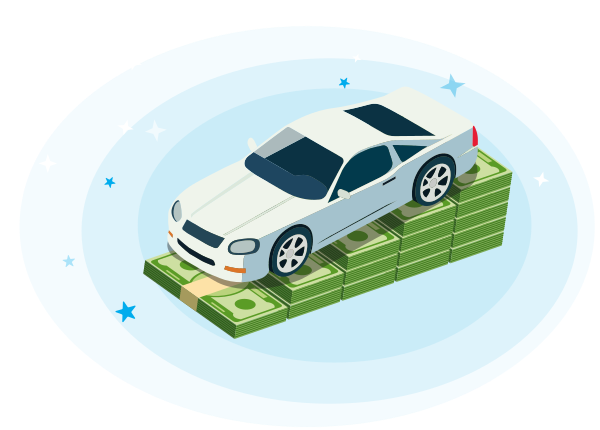
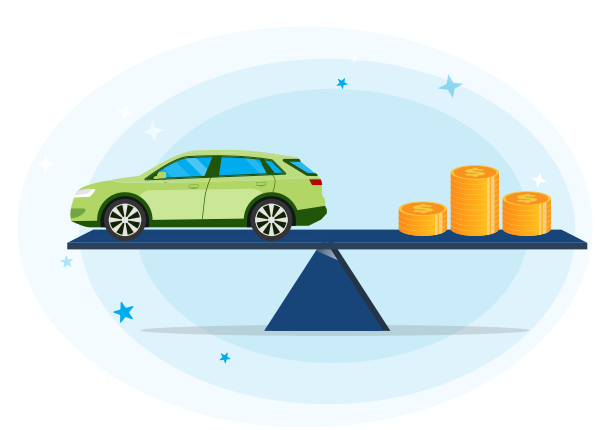
Negative equity, sometimes called being “upside down” or “underwater” on a loan, means you owe more on your car than it’s currently worth. It’s more common than most people realize, and it’s fixable, but it’s worth understanding before it affects your next car purchase, trade-in, or sale.
How Negative Equity Happens
Fast depreciation. New cars can lose a significant chunk of their value in the first year alone. If you financed most or all of the purchase price, your loan balance can outpace the car’s value early on.
Long loan terms. A 72- or 84-month loan means you’re paying down the balance slowly, while the car keeps depreciating the whole time. The longer the term, the longer you’re at risk of being underwater.
Little or no down payment. Starting with a high loan-to-value ratio means there’s less cushion between what you owe and what the car is worth from day one. Learn more about loan-to-value
Rolling over a previous loan balance. If you traded in a car that still had negative equity and rolled that balance into your new loan, you started the new loan already underwater.
How to Check If You’re Upside Down
Compare your current loan payoff amount (not just your monthly statement balance, ask for an actual payoff quote) to your car’s current market value, which you can estimate using a trusted valuation tool based on your vehicle’s condition, mileage, and trim.
If your payoff is higher than the car’s value, you’re in negative equity, and the difference between the two numbers is how much.
What Are Your Options?
Keep paying and let it correct itself. Negative equity often resolves on its own as you pay down principal and the depreciation curve flattens out, this is the simplest option if you’re not planning to sell or trade in soon.
Make extra principal payments. Paying down your balance faster closes the gap sooner. CFCU auto loans have no prepayment penalty, so extra payments always work in your favor.
Refinance. In some cases, refinancing can help, particularly if rates have dropped or your credit has improved since you took out the loan. It won’t erase negative equity, but it can improve your terms while you pay it down. See if refinancing makes sense.
Pay the difference out of pocket when you sell or trade. If you need to sell or trade in before the equity turns positive, you can cover the gap directly rather than rolling it into a new loan. [Read our guide on selling a car with a loan on it →]
Consider GAP coverage going forward. Guaranteed Asset Protection (GAP) covers the difference between your loan balance and your car’s value if it’s totaled or stolen, exactly the scenario where negative equity hurts the most. See loan protection options.
The Bottom Line
Negative equity isn’t a crisis, it’s a normal part of car ownership for a lot of people, especially early in a loan term. The key is knowing where you stand before you make your next move, whether that’s a trade-in, a private sale, or just deciding whether to make extra payments.
Talk to a CFCU loan officer to check your payoff amount or talk through your options.